On-Demand Parking App
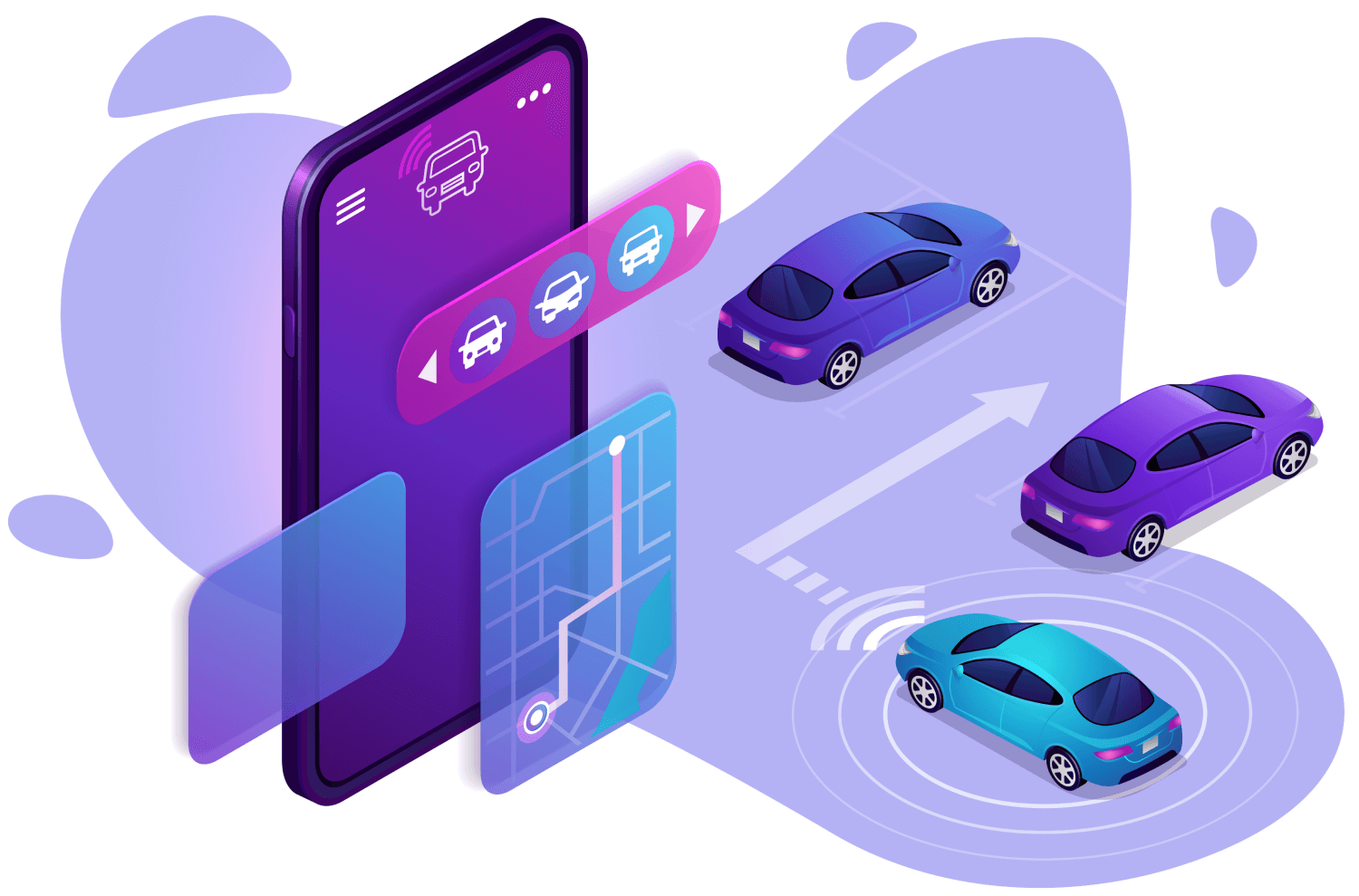
With the rapid increase in vehicles on the road, finding a parking space has become one of the biggest challenges in urban areas. Drivers often waste time circling streets or parking lots searching for an available spot. This leads to traffic congestion, fuel wastage, air pollution, and unnecessary parking fines.
At UberApps.tech, we offer professional Parking app development services designed to eliminate these challenges. Our Smart parking solution helps drivers locate, reserve, and navigate to available parking spaces in real time — making urban mobility more efficient and stress-free. Our Real-time parking availability app uses IoT integration and GPS technology to guide drivers directly to vacant parking spots. With our intelligent Navigation-based parking app, users can view the nearest, cheapest, and most suitable parking options before they even arrive.
How Does The Parking App Improve Your Business?
We specialize in developing scalable and feature-rich Custom car parking app solutions tailored to your business model. Whether you operate private parking facilities, commercial complexes, airports, malls, or car rental services, our advanced Parking booking app development ensures seamless space management and user convenience. If you run a car rental service, commercial parking facility, or multi-location parking network, investing in professional Parking app development helps streamline operations and boost profitability.
An advanced On-demand parking app is not only beneficial for drivers but also highly profitable for parking operators and rental companies. Our Smart parking solution enables businesses to:
- Optimize parking space allocation
- Reduce traffic violations
- Increase parking revenue
- Minimize operational inefficiencies
- Improve time management
How It Works
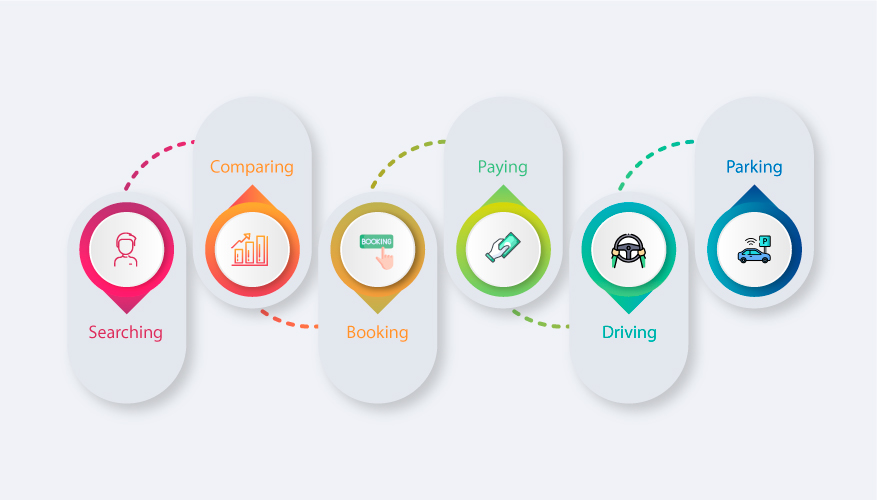
The basic principle of parking app functionality is rather simple. First, an app starts with searching features. Then, users must find a nearby parking space or enter the address where they want to park a vehicle.
If there are a few options in a particular place, users may filter them and choose the most appropriate option. Once they make a choice, they can proceed to book a parking spot. They may pay immediately using online banking or do it after having their car parked with cash (or using a QR code).
And finally, they see navigation from their current location to parking. There is no need to drive a car as fast as possible, the spot is already booked, and no one will occupy it. So, this is a short chain of events drivers should follow. It takes up to a couple of minutes.
Searching
The person uses GPS to find the automobile or type the required address.
Comparing
The app provides various parking options for locating the right match after sorting pricing or distance.
Booking
The driver obtains an access code for vehicle parking and reserves the desired parking place.
Paying
The customer has two options to make payment beforehand with a credit card or later with cash funds.
Driving
The parking app provides driving recommendations for the parking lot.
Parking
The driver can park his vehicle at booked parking space allotted with an access code.
Parking App Business Plan
When choosing a business model, clients should carefully follow the car parking app development process. Since parking apps are now very common, it is important to study competitors and understand how their business models work. Below are three basic models used by different parking applications.
Navigation-based model
The navigation-based model is the most commonly used option among parking app providers. With this model, users can easily find available parking spaces near their current location. However, advance booking is not always available. Therefore, these apps are mainly useful for locating nearby parking rather than reserving a spot in advance.
Navigation and booking-based model
This is a more advanced model that combines both navigation and booking features within a single app. Users can reserve a parking space before arriving at their chosen location. The navigation feature then guides them directly to their booked spot. These apps usually support multiple payment options, including cashless payments by card or digital wallets, as well as cash payments upon arrival.
A full-fledged service model
The full-service model is the most comprehensive and expensive option, offering a wide range of features and services. In addition to pre-booking, users can extend their parking time if needed. Some apps also provide valet services, where a professional parks the vehicle on the user’s behalf. Users can view valet details and credentials to ensure their vehicle is handled safely and securely.
Parking Apps Types
It is important to understand the different types of parking apps available in the market and identify which model would best serve your target users. Choosing the right type can help you deliver a complete parking solution and improve your chances of success.
Local Parking App
A local parking app is designed for a specific parking location or a limited group of parking spaces. For example, you may plan to build or manage a single parking lot. You can lease the space, secure it, mark parking spots, and then develop an app to manage bookings, payments, and user access. As your business grows, you can add more parking lots across the city, and the app can manage all of them from a single platform.
Broad Parking App
A broad parking app operates on a much larger scale. Instead of managing a single parking lot or brand, this type of app connects multiple parking facilities across a city, country, or even different regions. It acts as a marketplace where users can search for and book parking spaces from various providers. Since these apps serve a wider audience, they usually face higher competition and require strong features, marketing, and partnerships to succeed.
Parking Time App
A parking time app focuses on allowing users to reserve parking spaces for a specific time period. This feature is especially useful for travelers or commuters who want to plan their parking in advance. For example, a user traveling to another city can check available parking spots ahead of time and book a space for the exact duration they need. This type of app emphasizes time-based reservations and scheduling features.
How Do Car Parking Apps Make Money
Car parking apps generate revenue through multiple proven monetization strategies, making them a profitable digital business model in the fast-growing smart mobility market. As the demand for parking finder apps, smart parking solutions, and on-demand parking apps increases, companies can create steady income streams while offering convenience to users.
One of the most common revenue sources is the booking commission model. Parking apps charge a small commission on every successful parking reservation made through the platform. This model ensures recurring income as user activity grows.
Another popular method is subscription plans. Frequent users, corporate clients, or parking operators can subscribe to premium plans for benefits like discounted parking rates, priority booking, or detailed analytics. This creates predictable monthly or yearly revenue.
In-app advertisements also contribute significantly. Parking apps can display ads from nearby businesses, fuel stations, car wash services, or restaurants, generating additional income.
Many parking apps also earn through convenience fees or service charges added to each transaction. Some platforms offer value-added services such as valet parking, car cleaning, or EV charging, which create extra revenue streams.
With the right parking app business model, strong user base, and strategic partnerships, a car parking app can become a highly profitable and scalable venture.
Commissions
A certain percentage of each booking goes to the parking app owners.
Featured Listing
App owners run featured campaigns allowing the park owners to feature their space.
Advertisements
App owners run marketing campaigns with other brands, including car and car service centers.
Subscription-based Plans
The app can give users monthly subscriptions, through which they have to pay a certain amount of money at the beginning of a month.
Loyalty Points
To sustain revenue, you must provide them with specific benefits for their loyalty in some way.
Parking App Features
Are you planning to build a parking app? These are the general features to include in a car parking app.
User App
- Social Login/Signup
- Search Nearby Parking
- Book Instantly
- Car Back Request
- User Profile
- Allow System to Track Vehicle Location
- Schedule Booking for Parking Space
- Enter Arrival & Departure Time
- Reviews and Ratings for Parking Spots
- Manage History of Parking
- Payment History & Options
Parker App
- Social Login/Signup
- Contact Customers
- Add ID Proof Documents
- Check Reviews and Ratings
- Get Payment from Customers
- Accept or Decline Parking Request
- Add New Locations
- Earnings
Admin Panel
- User Manager
- Driver Manager
- Bookings Manager
- Approve/Reject Drivers Profile
- Revenue Manager
- Transaction Manager
- Wallet Manager
- Promo Manager
- Approve New Locations
- Reports
How Parking Apps Gather Data
Parking apps collect data mainly through two methods: manual tracking and sensor-based systems. Manual tracking involves staff updating parking availability, which can be slow and less accurate. Modern parking apps use smart sensors installed in parking areas to detect whether a spot is occupied or free.
These sensors may include ultrasonic devices or cameras. Camera-based systems can also identify a vehicle’s details, such as its license plate, making it easier for users to locate their cars and for operators to manage parking efficiently.
Parking App Development Cost
The cost of parking app development depends on the app’s complexity, features, and technology. Basic apps with simple navigation and booking functions are more affordable. However, advanced apps with real-time tracking, payment integration, sensor connectivity, and analytics require more development time and a higher budget. Overall, the total cost is based on the features required and the number of development hours involved.
Ready to get started?
Find parking anywhere, for now or later & pick the right spot that’s best for you.