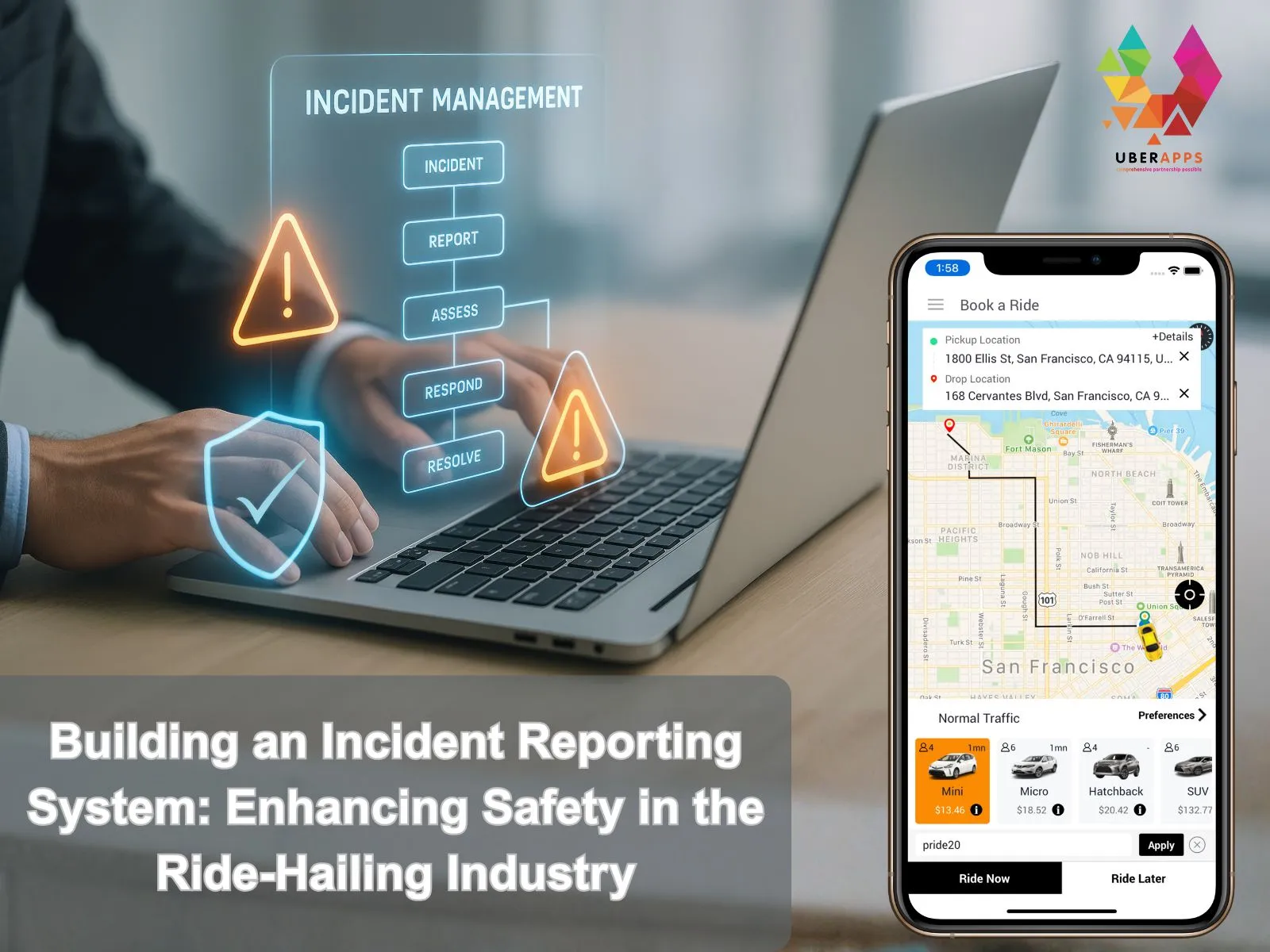
Building an Incident Reporting System: Enhancing Safety in the Ride-Hailing Industry
The explosive growth of the gig economy has fundamentally shifted how we move, but it has also introduced a complex new variable into the equation of urban transport: trust. When a user opens a taxi booking app to summon a ride, they are entrusting their physical safety to a stranger and an algorithm. For platform owners, this reality creates a massive responsibility. A single high-profile safety incident can shatter a brand’s reputation overnight, regardless of how advanced its pricing algorithms or UI might be. Therefore, building a comprehensive incident reporting system is not merely a compliance checkbox; it is a competitive differentiator that signals to your users—both drivers and riders—that you value their lives.
For entrepreneurs and developers engaged in taxi app development, the challenge lies in moving from reactive support to proactive protection. A modern safety suite must do more than just log complaints; it must detect anomalies in real-time, facilitate immediate emergency response, and provide an immutable audit trail for legal protection.
In this guide, we will dissect the technical and operational anatomy of a world-class incident reporting system. From the database schemas that store sensitive evidence to the API integrations that connect your app to 911 dispatchers, we will cover every inch of ground needed to build a safer, smarter Uber clone.
In the high-stakes "trust economy" of on-demand transportation, a robust incident reporting system is not just a feature it is the backbone of your platform's survival. "Building an Incident Reporting System: Enhancing Safety in the Ride-Hailing Industry" is the ultimate technical and operational guide for entrepreneurs launching a SaaS taxi app or Uber clone. This post moves beyond surface-level advice, offering a deep dive into the architecture of safety: from integrating real-time 911 APIs like RapidSOS to designing a database schema that handles sensitive legal evidence. We explore critical ride-hailing app features such as AI-driven anomaly detection for route deviations, secure in-app payments for taxi apps to reduce conflict, and the delicate balance of handling false accusations. Whether you are a developer looking for the right tech stack or a founder aiming to build the safest fleet in the market, this guide provides the blueprint for excellence.
The Anatomy of a Modern Incident Management Workflow
To build a system that works under pressure, you must first understand the lifecycle of a safety incident. It is not enough to simply have a "Report" button; the backend architecture must support a seamless flow of data from the moment a trigger occurs to the final legal resolution.
The 6-Step Safety Loop
- Detection: This can be manual (a user pressing SOS) or automated (AI detecting a crash or long stop).
- Logging: The system instantly generates a unique Incident_ID, capturing timestamp, GPS coordinates, and vehicle telemetry.
- Triage & Prioritization: Algorithms classify the severity. A "forgotten item" is Low Priority; a "SOS trigger" is Critical.
- Investigation: The admin dashboard aggregates chat logs, route history, and audio recordings for the support team.
- Resolution: Actions are taken—refunds processed, accounts suspended, or law enforcement data packages exported.
- Closure & Feedback: The ticket is closed, and the system learns from the data to prevent recurrence.
Implementing this workflow requires a SaaS taxi app architecture that supports event-driven programming, ensuring that a critical event triggers immediate webhooks to your safety team's Slack or CRM.
Critical Ride-Hailing App Features for Safety
The "Silent" SOS and Emergency Integration
The panic button is a standard feature, but modern implementations go much further. A simple button that dials 911 is often insufficient because the user may be unable to speak. Leading platforms now integrate with APIs like RapidSOS, which transmit data directly to 911 dispatchers.
- Data Transmission: When the button is pressed, the app sends the user's name, live GPS location, car make/model, and license plate directly to the emergency dispatch center's screen.
- Silent Alert: The feature allows users to alert the platform and trusted contacts without alerting the driver, using haptic feedback to confirm the signal was sent.
AI-Driven Anomaly Detection (RideCheck)
Passive safety is the new gold standard. Your Uber clone script should include a background service that monitors the ride's progress against the estimated route.
- Long Stop Detection: If the vehicle remains stationary for more than 5 minutes in a non-traffic zone, the system triggers a "Are you okay?" push notification.
- Route Deviation: Significant detours trigger an alert.
- Premature Completion: If a ride is marked "Complete" 2 miles from the destination, it is flagged for immediate review.
Technical Implementation: APIs and Tech Stack
Building everything from scratch is inefficient. Top-tier taxi app development leverages specialized APIs to handle the heavy lifting of verification and safety.
Identity Verification (The First Line of Defense)
Before a driver can accept a single ride, they must be vetted.
- Tools: Jumio or Onfido.
- Function: These APIs require the driver to take a photo of their ID and a "liveness" selfie. The AI compares the biometric data to ensure the person holding the phone is the owner of the license, preventing account sharing—a major safety risk in the gig economy.
Background Checks
- Tools: Checkr or Sterling.
- Integration: These platforms offer robust APIs that can be triggered automatically during onboarding. They scan criminal records, sex offender registries, and driving history (MVR) in real-time, returning a "Clear" or "Consider" flag to your admin panel.
Telematics SDKs for Driver Behavior
To proactively prevent accidents, integrate a telematics SDK like Zendrive or Cambridge Mobile Telematics.
- What it tracks: Harsh braking, rapid acceleration, phone usage while driving, and speeding.
- Gamification: Use this data to generate a "Safety Score" for drivers. High scores can be rewarded with bonuses or lower commission rates, incentivizing safe driving habits.
Designing the Incident Database Schema
For developers, the database structure is critical. You need a dedicated schema that links incidents to rides while maintaining data privacy. Here is a simplified conceptual schema for an Incidents table in a SQL environment:
| Field Name | Data Type | Description |
|---|---|---|
| incident_id | UUID | Primary Key, unique identifier. |
| ride_id | UUID | Foreign Key linking to the specific trip. |
| reporter_id | UUID | ID of the user (driver or rider) reporting. |
| category | ENUM | 'Accident', 'Harassment', 'LostItem', 'SOS'. |
| severity | INT (1-5) | 1=Low, 5=Critical (triggers immediate alert). |
| status | ENUM | 'Open', 'Investigating', 'Resolved', 'Legal'. |
| evidence_url | VARCHAR | Secure link to S3 bucket containing audio/images. |
| location_lat | FLOAT | Latitude at the time of report. |
| location_long | FLOAT | Longitude at the time of report. |
| created_at | TIMESTAMP | Exact time of the incident. |
Security Tip: Ensure that fields like evidence_url are protected with short-lived access tokens (Signed URLs) so that sensitive photos or audio recordings are not publicly accessible.
The Admin Control Tower: Managing Chaos
The user-facing features are only half the battle. The admin panel is where your safety operations team (Trust & Safety) fights the war. A generic admin dashboard is insufficient; you need a specialized "Safety View."
Real-Time Incident Dashboard
This dashboard should look like an air traffic control center. It must display a live map of all active rides, with color-coded pins for triggered incidents.
- Red Pin: SOS Trigger (Needs immediate police escalation).
- Orange Pin: Route deviation > 15 mins.
- Yellow Pin: Negative keyword detected in chat (e.g., "stupid," "hurt," "police").
Automated Suspension Workflows
Speed is critical. If a user reports "Physical Assault," the system should support an Auto-Suspension logic.
- Immediate Action: The accused party's account is temporarily deactivated pending investigation.
- Notification: Automated emails are sent to both parties explaining the status without admitting liability.
- Conflict Resolution: The dashboard should allow admins to replay the ride (breadcrumbs on map), read chat history, and listen to VoIP call recordings (if legal in your jurisdiction) to determine the truth.
Financial Safety: In-App Payments as a Buffer
Physical safety and financial safety are deeply intertwined. Cash transactions are a leading cause of driver-passenger disputes, which can escalate into violence.
Eliminating the "Change" Conflict
By enforcing in-app payments for taxi apps, you remove the friction of negotiating fares or finding loose change. Secure payment gateways (Stripe, Razorpay, PayPal) hold the money in escrow.
- Refund Automation: If a safety incident is verified (e.g., the driver didn't drop the user at the correct location), the admin panel should allow for a "One-Click Refund" that reverses the transaction instantly.
- Cancellation Fees: Disputes often arise from cancellation fees. Your system needs a logic check: Did the driver arrive on time? Was the driver at the correct GPS coordinates? If not, the cancellation fee should be waived automatically, preventing a user complaint before it happens.
Future Trends: Predictive Safety
The next frontier in taxi app development is prediction. Instead of reacting to a crash, can we prevent it?
- Facial Recognition Attendance: Before going online, drivers must verify their identity via a selfie to ensure the verified driver is the one behind the wheel (preventing "renting" of accounts).
- Fatigue Monitoring: Using the front-facing camera or app usage patterns to detect if a driver is drowsy and forcing them offline for a 6-hour break.
- Sentiment Analysis: NLP (Natural Language Processing) models running on in-app chats to flag aggressive language before the ride even starts, potentially cancelling the booking to prevent a conflict.
Conclusion
Building an incident reporting system for your SaaS taxi app is a complex but non-negotiable undertaking. It requires a delicate balance of empathetic UX design, rigorous backend engineering, and strict operational protocols. By integrating advanced tools like real-time SOS APIs, telematics for behavior monitoring, and a responsive admin "Control Tower," you do more than just write code—you build a sanctuary for your users.
In the end, safety is the ultimate loyalty program. When a passenger knows that your platform watches over them with an AI-driven guardian angel, and a driver knows that support is just one tap away, you create a trusted ecosystem that no competitor can easily replicate. Invest in safety today, and you secure the future of your ride-hailing business.
FAQS
1. What happens if a user accidentally presses the SOS button?
A well-designed safety system provides a 5-second countdown before sending an SOS alert, allowing users to cancel it if pressed by mistake. If sent, the safety team will call the user immediately. Confirmed mistakes are closed as "False Alarm" with no penalty.
2. How can I report dangerous driving without calling the police?
Your app should offer a "Report Safety Issue" button within the "Help" or "Trip Details" section, letting users flag non-emergency concerns. Reports are sent to the internal Trust & Safety team for review and potential driver retraining or suspension.
3. How does the system handle false accusations against drivers?
The system relies on GPS logs, opt-in audio recordings, and historical report patterns to validate claims. Passengers who repeatedly submit false reports are flagged to prevent abusive refunds and protect drivers.
4. Can I integrate a 'Record Audio' feature in my Uber clone?
Yes, provided you follow local wiretapping laws. The safest approach is an "Opt-In" system where both parties are notified and recordings are encrypted—accessible only to Admin for investigations.
5. What is the 'Ride Check' feature and how does it work?
Ride Check uses GPS and accelerometer data to detect anomalies, such as long stops or crashes. When detected, the app prompts for confirmation and offers instant help if needed.
Author's Bio

Vinay Jain is the Founder of UBERApps and brings over 10 years of entrepreneurial experience. His focus revolves around software & business development and customer satisfaction.